How to Navigate State-Specific Requirements While Obtaining Your Authority
Alexandra Palmer
May 8, 2026
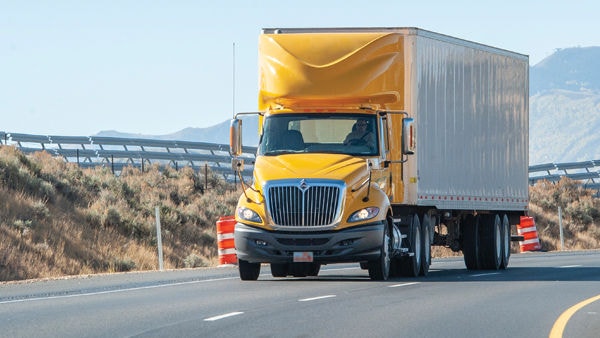
Obtaining operating authority can feel overwhelming enough without even considering the state-specific requirements that may apply to your new company. Each state has its own registration, tax, and compliance requirements. Understanding and managing these state specific obligations early can help you avoid fines, delays, and costly disruptions to your business.
Getting the right authority
In order to determine which regulations are relevant to your business, you need to first ensure you are registering for the right type of authority. Which government operating authority regulations apply to a carrier depends upon several factors:
The kind of motor carriage conducted (for-hire, private, exempt);
Where the motor carriage takes place (interstate, intrastate); and
The kind of commodity transported (exempt commodities, household goods, hazardous materials, general commodities, passengers).
In some cases, a carrier may be subject to both federal and state requirements. Many states require additional filings beyond federal authority. These additional requirements may include Unified Carrier Registration participation, permits tied to fuel use or oversize/overweight loads, or laws regulating vehicle emissions. Failure to comply with these regulations may result in fines or even out-of-service violations.
Is UCR a state requirement?
Federal and state governments have a responsibility to ensure the smooth and efficient transportation of persons and property in U.S. commerce and to provide a level of public protection from damage that may result from this transportation.
While the Unified Carrier Registration (UCR) program is federally mandated, it is state administered with participation and enforcement both being handled by states.
The following entities must register under the UCR program: For-hire motor carriers (e.g., trucking companies transporting passengers or goods for clients across state lines);
Private motor carriers (e.g., businesses using their own trucks to move their own goods across states);
Freight forwarders and brokers; and
Leasing companies involved in interstate transport.
Solely intrastate carriers (never crossing state lines, never engaging in interstate commerce) are not subject to the UCRA. These carriers are subject to the authority registration and renewal requirements in the state of operation.
The International Fuel Tax Agreement (IFTA)
The International Fuel Tax Agreement (IFTA) is an agreement among member jurisdictions (the lower 48 United States and 10 Canadian provinces) for the collection and distribution of fuel use tax revenues.
IFTA allows carriers (including private carriers) to obtain one license and file one quarterly tax return. The carrier obtains the IFTA license through the base jurisdiction and files the taxes and makes tax payments (as applicable) to the base jurisdiction. The base jurisdiction then distributes the necessary fuel taxes to other jurisdictions.
The International Registration Plan (IRP)
Similarly, the International Registration Plan (IRP) is an agreement that provides for the apportioned registration of commercial motor vehicles, allowing a qualifying commercial vehicle to travel through several states with one license plate, provided the apportioned registration fees have been paid to the base jurisdiction.
The base jurisdiction collects the fees, sends each jurisdiction its share, and issues a single IRP cab card and apportioned vehicle registration plate that allows travel in all jurisdictions.
Who needs to register for IFTA and IRP?
Both IRP and IFTA apply to qualified motor vehicles operating in more than one jurisdiction. A “qualified motor vehicle” is a motor vehicle used, designed, or maintained for transportation of persons or property, and that:
Has two axles and a gross vehicle weight or registered gross vehicle weight exceeding 26,000 pounds or 11,797 kilograms; or
Has three or more axles regardless of weight; or
Is used in combination, when the weight of such combination exceeds 26,000 pounds or 11,797 kilograms gross vehicle weight.
Heavy Vehicle use tax (HVUT)
The Heavy Vehicle Use Tax (HVUT) applies to highway motor vehicles having a taxable gross weight of 55,000 pounds or more and includes trucks, tractors, and buses. You may be an individual, corporation, partnership, or any other type of organization (including nonprofit charitable, educational, etc.).
Carriers who meet these requirements must file Form 2290 and Schedule 1 if a taxable highway motor vehicle is registered or required to be registered in your name under any state or District of Columbia, Canadian, or Mexican law at the time of its first use.
The TLDR
Understanding and managing state requirements after getting your authority is essential for long-term success. With the right tools and support, you can stay compliant, avoid setbacks, and keep your trucks moving confidently nationwide.
Contact J. J. Keller at 888-601-2017 for help!